Ah, transition.
Nature goes through it, and we as human beings go through it too.
One of the biggest transitions in life is menopause.
Ladies, we are very familiar with this word. Gentlemen—you should be too, if you’re not already. Transition is inevitable. But just because something is natural doesn’t mean it always feels good.
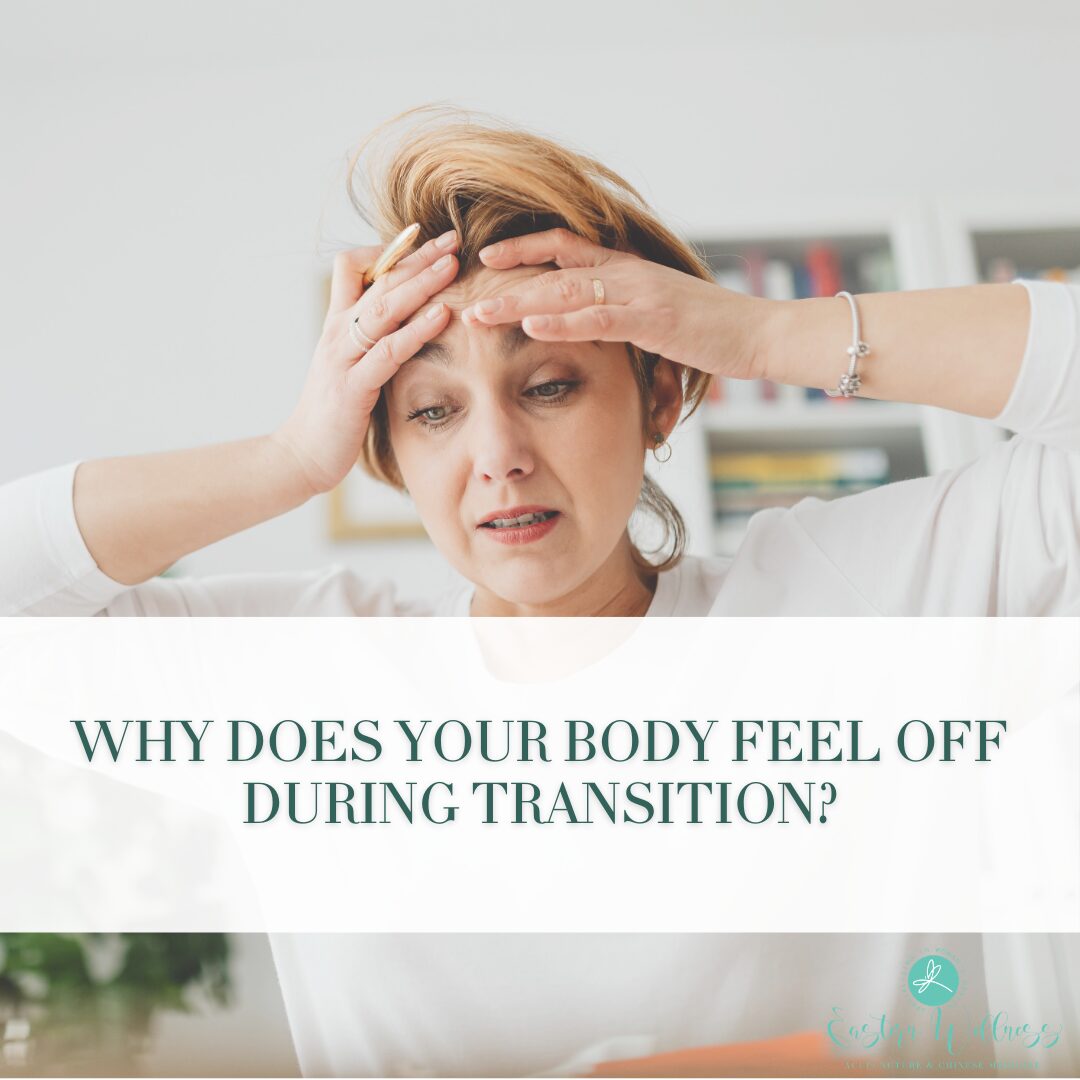
Sometimes, during transitions, we don’t feel like ourselves. Sometimes, it can even feel like our body is turning against us or developing illness.
It’s important to say this clearly:
Menopause is not a disease.
But we also shouldn’t ignore the fact that many people don’t feel well during this time.
So why does this happen?
Looking Through the TCM Lens: Balance Over “Normal”

Now let’s put on our TCM glasses.
In Traditional Chinese Medicine, balance is the key to wellness. Health isn’t just a clean bill of health or normal lab results. (We’ve all asked the question: Why do I still feel unwell when all my labs are normal?)
True wellness is about functioning at your most balanced state:
- Not too excited, not too sluggish
- Not hypervigilant, not under-alert
- Balanced nervous system and neuromuscular function
Health is not about extremes. It’s about harmony.
Menopause as a Transitional Phase, Not a Breakdown
Let’s use menopause as an example of transition.
In the classic TCM text Huang Di Nei Jing, menopause is described as a natural shift—from fertility toward regulation and maintenance. During this phase, the body gradually reallocates its energy.
Instead of focusing on reproduction, the body begins to:
- Prioritize recovery
- Stabilize core functions
- Allocate nutrients to systems that need them most
- Respond to stress
In other words, Qi (energy) shifts toward maintaining function.
What the Body Is Doing During Menopause
Physiologically, ovulation gradually stops as estrogen production declines. As estrogen decreases, adrenaline begins to take on a larger role in estrogen production.
With less estrogen and more adrenal dominance:
- The nervous system becomes more reactive
- Fluctuations become more noticeable
This is why many women experience changes in sleep, mood, focus, and stress tolerance.
And yet—you may know someone who moves through menopause smoothly, as if it were a walk in the park.
Why?
Menopause Doesn’t Create Disease — It Reveals Imbalance
Menopause itself does not cause disease.
It exposes the weakest link.
From a TCM perspective, during menopause:
- Kidney Yin gradually depletes
- Qi and Blood may fail to keep up
- Liver Qi can stagnate due to insufficient Qi and Blood to move through the meridians
- Coordination between the Kidney and Heart (which partially manifests as nervous system balance) becomes less stable
But this doesn’t start at menopause.
It starts long before.
Energy is constantly being used and replenished throughout life. Menopause is simply the point where the body can no longer compensate the way it used to.
If imbalance already exists, it becomes more visible.
The Body Is Always Communicating With You
Your body is constantly talking to you.
- The foods you crave
- The fatigue you feel
- The pain that lingers for days or weeks
- The racing thoughts that keep you awake at night
These signals are not bad.
They are necessary.
They tell us whether the body is coping—or struggling.
During menopause, as fertility declines, the body shifts its message:
“I’m here. If we’re no longer focused on reproduction, can we finally take care of me?”
Why We Miss the Signals
In modern society, we are encouraged to push through.
To override discomfort.
To mask symptoms.
As a result, many signals are ignored or covered up.
Sometimes the messages from the body feel confusing or overwhelming. You try to address them, but everything feels loud, and you’re not sure what actually matters.
That confusion itself is a signal.
I often hear patients say, “I feel like I’m seeing more doctors as I get older.”
It’s not because your body is weaker.
It’s because your body is asking for more attention—and a different kind of care.
During transitional stages of life, working harder or pushing through is no longer the right strategy.
Why TCM Can Be a Supportive Companion
This is where Traditional Chinese Medicine can serve as a meaningful health companion.
The goal is not to label or mask symptoms.
The goal is to help you understand what your body is trying to say—and gently guide it back toward balance.
Menopause is not a failure of the body.
It’s an invitation to listen more closely.
And when we learn to listen, the body often shows us the path back to wellness.