Summer is a time of expansion.
Longer days. More activity. More movement.
But with that comes heat.
And for many people, that heat doesn’t just stay outside—it builds internally.
You may start to notice:
- Fatigue
- Irritability
- Poor sleep
- Digestive discomfort
- Increased inflammation
From a Traditional Chinese Medicine (TCM) perspective, summer is governed by Heat and Yang energy.
When balanced, this energy supports vitality and circulation.
But when excessive, it can deplete fluids, disturb the mind, and disrupt the body’s natural rhythm.
So the goal is not to fight summer.
It’s to work with it—by cooling, hydrating, and maintaining internal balance.
Understanding Summer in TCM
In TCM, each season is associated with specific organs and energies.
Summer is connected to:
- The Heart
- The Small Intestine
- The element of Fire
Fire represents warmth, activity, and outward expression.
But too much fire leads to:
- Restlessness
- Insomnia
- Anxiety
- Inflammation
At the same time, heat consumes fluids.
This leads to Yin depletion.
And Yin is what cools, nourishes, and stabilizes the body.
Why Hydration Matters More in Summer
Hydration is not just about drinking water.
It is about maintaining the body’s internal fluid balance.
In TCM, fluids are part of Yin.
When fluids are depleted:
- Heat rises more easily
- The body becomes more reactive
- Symptoms like dryness, fatigue, and irritability increase
Modern research supports this.
Even mild dehydration can impact mood, cognition, and energy levels.
A study published in The Journal of Nutrition found that mild dehydration can lead to increased fatigue, tension, and decreased concentration.
This means hydration directly affects both physical and mental function.
The Role of Cooling Foods
One of the simplest ways to regulate internal heat is through food.
In TCM, foods are not just nutrients.
They have energetic properties.
Some foods warm the body.
Some cool it.
During summer, we naturally need more cooling foods.
What Are Cooling Foods?
Cooling foods help:
- Clear internal heat
- Generate fluids
- Reduce inflammation
- Calm the system
Some of the most effective cooling foods for summer include:
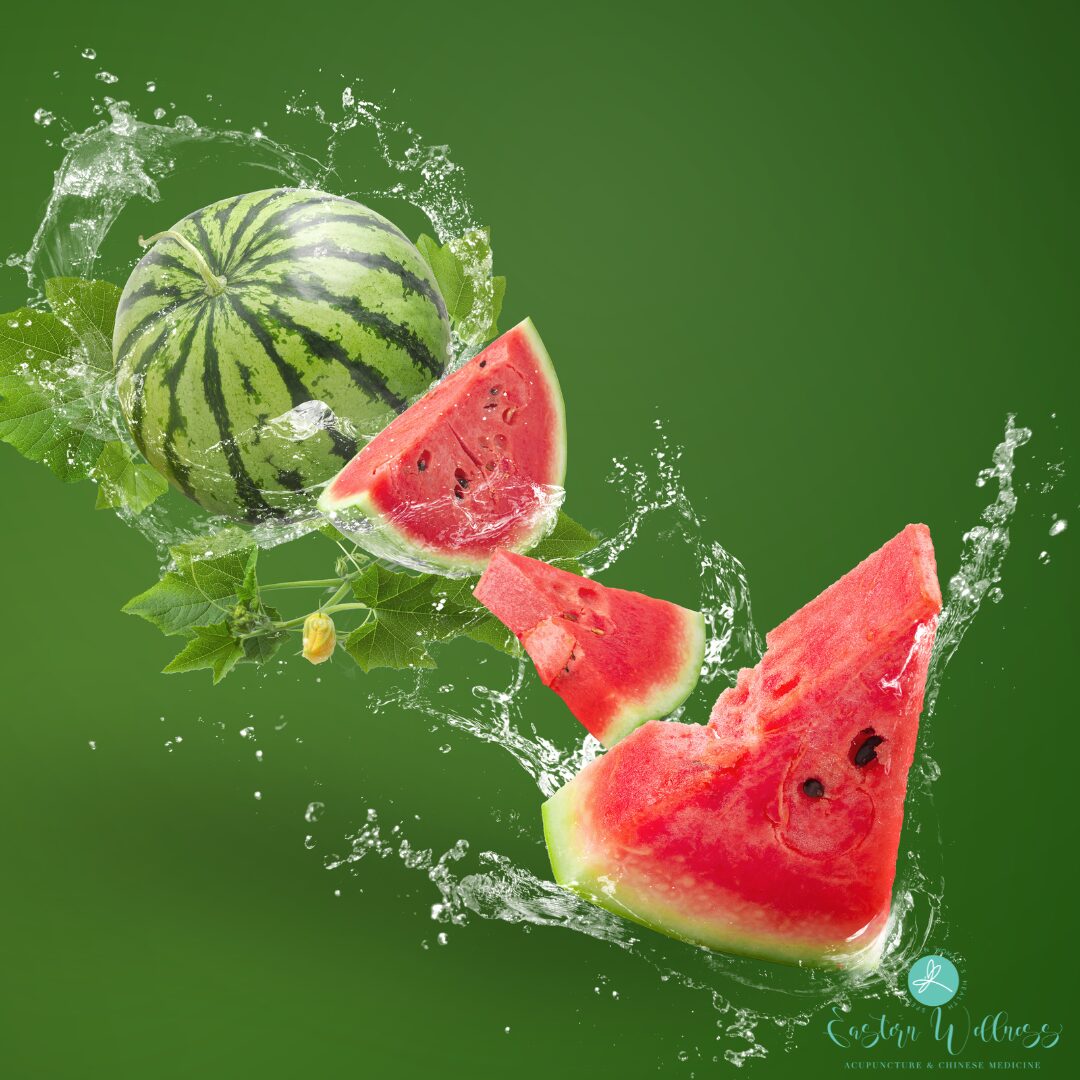
- Watermelon
- Cucumber
- Mint
- Leafy greens
- Zucchini
- Tomatoes
These foods are naturally high in water content and help replenish fluids lost through sweating.
Water-Rich Foods and Hydration
Hydration doesn’t only come from drinking water.
It also comes from food.
Fruits and vegetables with high water content support:
- Fluid balance
- Electrolyte stability
- Cellular hydration
Research published in Nutrients highlights that dietary water intake from fruits and vegetables contributes significantly to overall hydration status.
This reinforces what TCM has emphasized for centuries:
Hydration is not just about volume—it’s about quality and balance.
The Balance Between Cooling and Digestion
While cooling foods are important, balance still matters.
Too many cold or raw foods can weaken digestion.
In TCM, the Spleen prefers warmth.
If digestion becomes weak:
- Bloating increases
- Energy decreases
- Nutrient absorption declines
So the goal is not extreme cooling.
It is gentle cooling while supporting digestion.
For example:
- Lightly cooked vegetables
- Room temperature foods
- Avoiding excessive ice-cold drinks
Herbal Teas for Summer Cooling
Herbal teas are another effective way to support hydration and cooling.
In TCM, herbs are used to guide the body back into balance.
Some commonly used summer teas include:
- Mint tea → clears heat and refreshes
- Chrysanthemum tea → cools the liver and eyes
- Green tea → clears heat and supports metabolism
- Rooibos tea → gentle and hydrating
These teas provide both hydration and functional support.
Why Ice-Cold Drinks Can Backfire
Many people instinctively reach for ice-cold drinks in summer.
But in TCM, this can actually disrupt digestion.
Cold constricts.
It slows down the digestive process and weakens the Spleen.
Over time, this can lead to:
- Bloating
- Fatigue
- Poor nutrient absorption
Instead, room temperature or slightly cool drinks are preferred.
Sweat, Electrolytes, and Fluid Loss
Summer heat increases sweating.
Sweating is a natural cooling mechanism.
But it also leads to:
- Fluid loss
- Electrolyte depletion
If fluids are not replenished properly, symptoms may include:
- Dizziness
- Fatigue
- Muscle weakness
This is why hydration should include:
- Water
- Mineral-rich foods
- Electrolyte support when needed
The Emotional Impact of Heat
In TCM, heat affects not only the body—but also the mind.
Excess heat can disturb the Heart.
This may show up as:
- Irritability
- Anxiety
- Restlessness
- Poor sleep
This is commonly seen in summer.
And it’s often overlooked.
Supporting the Nervous System in Summer
When the body is overheated, the nervous system becomes more reactive.
Cooling strategies help regulate this.
This includes:
- Proper hydration
- Cooling foods
- Rest
- Gentle movement
Because again—healing does not happen in a stressed state.
Lifestyle Tips for Staying Cool
Beyond food and hydration, lifestyle plays a key role.
Simple adjustments can make a big difference.
1. Adjust Activity Levels
Avoid intense activity during peak heat hours.
2. Prioritize Rest
Summer is active—but rest is still essential.
3. Spend Time in Nature
Natural environments help regulate heat and stress.
4. Wear Breathable Clothing
Allow the body to release heat effectively.
Movement Without Overheating
Exercise is important—but intensity matters.
In summer, TCM recommends:
- Walking
- Stretching
- Tai Chi
- Qi Gong
These promote circulation without generating excessive heat.
Signs of Internal Heat Imbalance
Sometimes the body signals that heat is becoming excessive.
Common signs include:
- Thirst
- Dry mouth
- Dark urine
- Skin breakouts
- Irritability
- Poor sleep
These are signs the body needs cooling and hydration support.
A Gentle Approach to Summer Wellness
Summer does not require extreme changes.
It requires awareness.
Small adjustments create balance:
- Eating cooling foods
- Staying hydrated
- Supporting digestion
- Managing stress
Bringing It All Together
When we look at summer through both TCM and modern science, the message is consistent:
The body thrives when it is supported—not forced.
Cooling foods help regulate internal heat.
Hydration supports every system in the body.
Lifestyle choices determine how well we adapt.
The Takeaway
Summer heat is not the problem.
Imbalance is.
When we support Yin, regulate heat, and maintain hydration, the body adapts naturally.
You don’t need extremes.
You need consistency.
Because sometimes the most powerful way to support your health…is also the simplest.